Mike Meetz and Sam Wormley team up to provide a lively
discussion with OLLI members about science in the news. A
deep understanding of science is not required to share and
discuss recent Science in the News. Past Classes.
⓵ Early humans in America endured climate chaos-new research
https://phys.org/news/2026-10-early-humans-america-climate-chaos.html
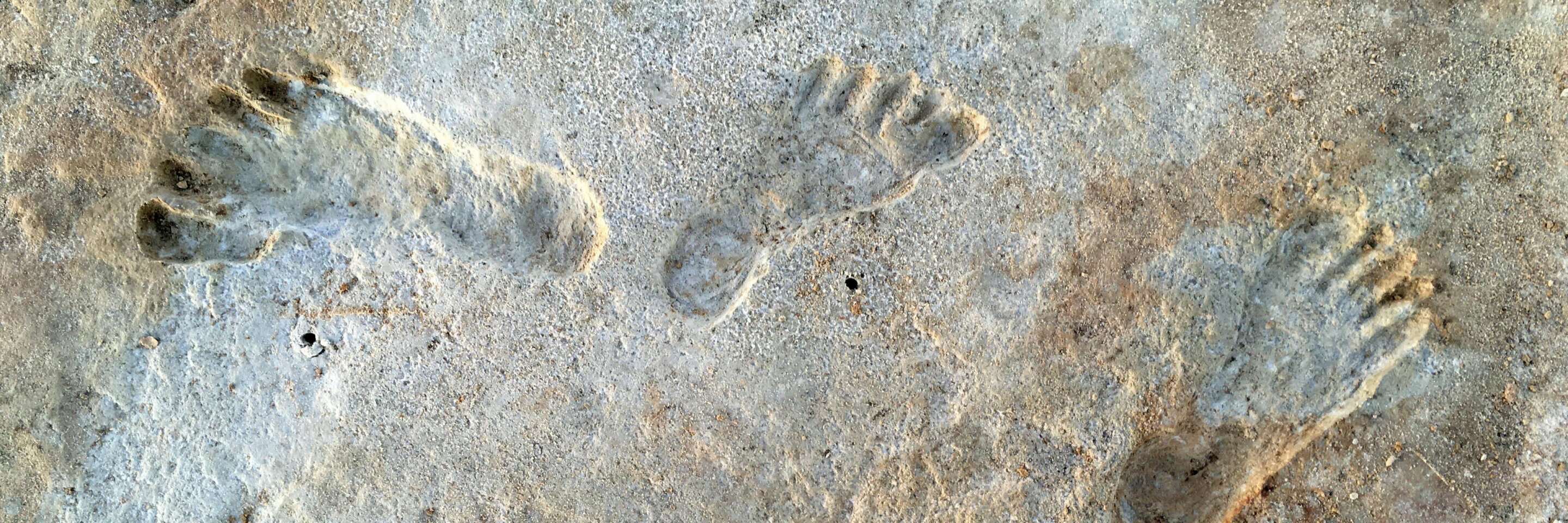 Some 23,000 years ago, during the coldest part of the last
ice age, people walked across the muddy margins of an
ancient lake in what is now White Sands National Park, New
Mexico. The footprints they left behind have transformed our
understanding of when people first reached the Americas When
we reported dates for the White Sands footprints in 2021,
our findings were met with controversy. They placed people
in North America thousands of years earlier than other
widely accepted sites.
Subsequent work using several independent dating techniques
strengthened that chronology. Our latest research takes the
story a step further. Rather than simply asking when people
were at White Sands, we can begin to ask: What sort of world
did they experience? Our work is published in Science
Advances and Fossil Studies.
The answer is a surprisingly dynamic one that was marked by
periods of rapid climate change. Our expanded excavations at
White Sands have identified 20 different horizons or
packages of sediment containing human footprints. Together
they span almost two millennia, from about 23,500 to 21,700
years ago, firmly within the last glacial maximum (the
height of the last ice age).
⓶ Same Calories, Same Nutrients - but One Meal Triggered a
Surprising Reaction in the Body
https://scitechdaily.com/same-calories-same-nutrients-but-one-meal-triggered-a-surprising-reaction-in-the-body/
https://www.nature.com/articles/s42255-026-01619-4/figures/1
Ultraprocessed foods supply more than half of the average
American’s daily calories, and their place in diets
worldwide is growing. Formulated to be convenient,
accessible, affordable, and highly palatable, they can be
easy to overeat. Understanding their effects on health,
however, requires untangling the influence of processing
from that of the nutrients they contain.
Meals with the same basic nutritional profile are generally
expected to affect blood sugar in similar ways. Yet in a
Virginia Tech study, healthy adults expended more energy and
burned less carbohydrate after eating an ultraprocessed meal
than after a minimally processed one. Both meals contained
300 calories and were closely matched for carbohydrates,
fat, protein, water, salt, and weight. The findings appeared
in Nature Metabolism.
Related
Healthy Food vs. Highly Processed Food: What to Know
https://www.healthline.com/nutrition/junk-food-vs-healthy-food
Mediterranean Diet (Science and Recipes)
http://edu-observatory.org/olli/Mediterranean/index.html
⓷ Import AI 477: In which I tell the IMF the Singularity has begun
https://importai.substack.com/p/import-ai-477-in-which-i-tell-the
The singularity is here. The implications reach across every
aspect of life. But the most important implication is a
simple one: we should expect that in the coming years, the
whole pace of progress of not just AI, but science as a
whole, will speed up. This will feel confusing and
disorienting, and it will bring with it great wealth and
potentially great peril.
Today, I'm going to concentrate on the first point: the
potential benefits of rapid AI progress, and what we need to
do to share in these benefits together.
So many of the ways that humanity will benefit from Al come
from science. I believe that Al-driven scientific invention
will change the course of the global economy, alter the ways
countries plan and build their own infrastructure, make us
all healthier and able to spend more time with our loved
ones, and - at the same time — cause us all to ask deep
philosophical questions about choices we should make about
its continued development.
I'll develop my claim: For the last half century, most
countries have dealt with falling research productivity
while researcher headcount grows rapidly - ideas and
inventions appear to be getting harder to find.
But something important has changed: we've now built AI
systems which have been able to augment, extend, and
automate aspects of human labor. This has most obviously
happened in software development, where Al systems are now
more capable and efficient than the vast majority of the
world's software engineers. As a consequence, the field of
software development is changing - A single person is now
able to write software for anything they can imagine,
creating things that previously would have taken entire
teams of humans.
————————————————————
In artificial intelligence, the “singularity” (often called
the technological singularity) refers to a hypothetical
future point at which AI surpasses human intelligence and
begins improving itself at an accelerating rate, triggering
changes so rapid and profound that the world afterward
becomes difficult or impossible for humans to predict or
comprehend.
The idea rests largely on the concept of an “intelligence
explosion,” first described by mathematician I.J. Good in
1965: a machine smart enough to design better machines could
create successively more capable versions of itself, each
iteration arriving faster than the last. The term was
popularized by science fiction author and mathematician
Vernor Vinge in the 1990s and later by futurist Ray
Kurzweil, who predicted it would arrive around 2045.
The word itself borrows from mathematics and physics, where
a singularity is a point at which normal rules break down,
like the center of a black hole. Views on it vary widely:
some see it as an inevitable and potentially utopian turning
point, others warn of serious risks if superintelligent
systems don’t share human values, and skeptics argue that
intelligence may not scale so neatly or that physical,
economic, and practical limits would slow any such runaway
growth.
⓸ Oxygen collisions show evidence of jet quenching, a signature
of early-universe matter
https://phys.org/news/2026-10-oxygen-collisions-evidence-jet-quenching.html
New results from the STAR experiment at the Relativistic
Heavy lon Collider (RHIC) provide strong evidence that
smashing oxygen nuclei together at nearly the speed of light
generates a quark-gluon plasma (QGP), a type of matter that
existed just after the birth of the universe. The data, just
published in Physical Review Letters, show that energetic
jets of particles lose energy as they traverse the hot,
dense matter left in the collision's wake. This energy loss
phenomenon, known as jet quenching, has been one of the
"smoking gun" signatures of QGP formation in collisions of
larger atomic nuclei at RHIC, a U.S. Department of Energy
(DOE) Office of Science user facility that operated at DOE's
Brookhaven National Laboratory from 2000 until earlier this
year.
This signature has also been observed in oxygen-oxygen
collisions at the Large Hadron Collider (LHC), located at
CERN, the European Particle Physics Laboratory. The analysis
from RHIC at significantly lower collision energy sets a new
lower boundary for the conditions capable of producing the
primordial QGP in this small collision system. "The QGP is
believed to be the form of matter that filled the early
universe-before the protons and neutrons that make up
today's atoms formed.
————————————————————
Quark-gluon plasma is the state of matter that filled the
universe for roughly the first few millionths of a second
after the Big Bang, before quarks and gluons cooled enough
to bind into protons and neutrons. Recreating it in
heavy-ion colliders like RHIC and the LHC lets physicists
look directly at that early epoch and test quantum
chromodynamics, the theory of the strong force, in a regime
where it is otherwise very hard to calculate. It also shows
how confinement works, meaning why quarks are never seen
alone and how most of the mass of ordinary matter arises
from strong-force interactions rather than from the quarks
themselves.
The plasma has also surprised researchers by behaving like a
nearly perfect liquid with extremely low viscosity rather
than a dilute gas. That finding has links to other strongly
interacting systems such as ultracold atomic gases, to the
interiors of neutron stars, and, through holographic
dualities, to string theory and black hole physics.
⓹ The sun may have stripped away meters of interstellar comet 3I/ATLAS
https://phys.org/news/2026-10-sun-meters-interstellar-comet-3iatlas.html
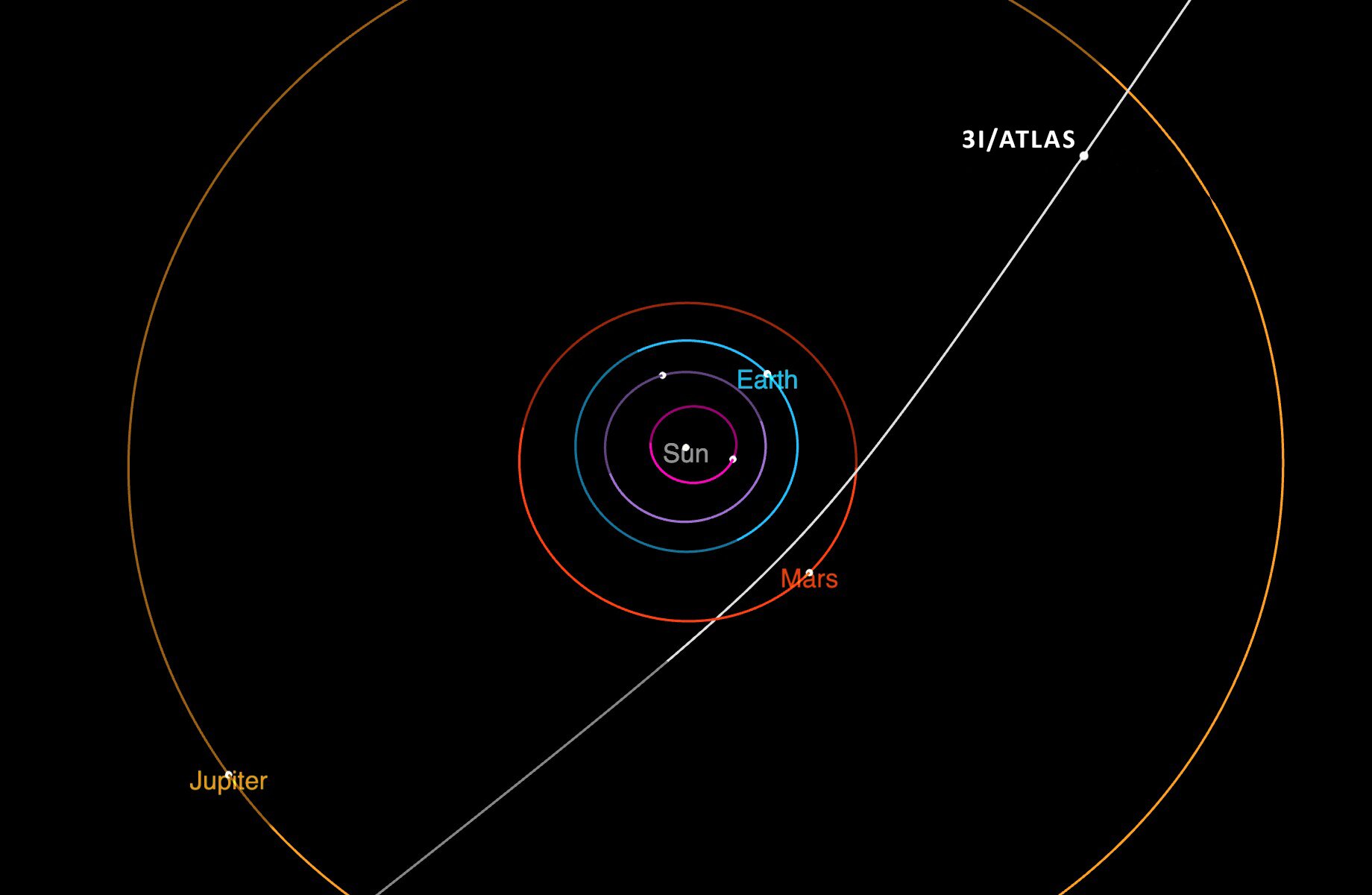
The interstellar comet 3I/ATLAS brought material from
another planetary system within reach of our telescopes, but
reading its chemistry poses a problem. Energetic particles
encountered during its journey through space may have
changed its outer layers, so how much of what astronomers
detect still reflects the comet's birthplace? The sun may
have helped reveal a clearer record. Using published
measurements of escaping gas only, researchers estimate that
solar heating removed the equivalent of a surface layer
about 1.7-5.2 meters (5.6-17 feet) thick. Including
plausible amounts of lost dust pushes some estimates beyond
10 meters (33 feet).
 Here are the highlights:
1. Discovery and identity: It was found on July 1, 2025, by
the ATLAS survey telescope in Chile, making it the third
confirmed interstellar object after ‘Oumuamua in 2017 and
2I/Borisov in 2019. Unlike ‘Oumuamua, it was clearly an
active comet from the start.
2. Speed and age: It’s the fastest interstellar object ever
recorded (roughly 58 km/s relative to the Sun). Its
trajectory suggests it may come from the Milky Way’s older
“thick disk,” possibly making it billions of years older
than our solar system.
3. Early appearance: VLT spectra taken two days after
discovery showed a red, dust-dominated coma with no
detectable gas, redder than most Solar System comets but
similar to some trans-Neptunian objects and Centaurs.
4. Unusual chemistry: JWST and others found an unusual
prevalence of carbon dioxide over water, and a
nickel-to-iron ratio differing from Solar System comets.
Nickel vapor was detected with little or no iron, which was
surprising.
5. Perihelion behavior: It passed closest to the Sun in late
October 2025, when it was hidden behind the Sun from Earth.
Spacecraft such as Mars orbiters, PUNCH and Juice observed
it. Its activity rose sharply after perihelion, with ices
sublimating and releasing water, carbon dioxide and
hydrocarbons. It also showed non-gravitational acceleration
from outgassing and an unusual sunward “anti-tail.”
6. Nucleus size: Hubble put an upper limit of a few
kilometers on the nucleus. The bright coma made a precise
measurement hard.
7. Natural origin: Its quirks prompted some speculation
about artificial origins, but NASA confirmed it is an
interstellar comet and shared data from multiple missions
supporting that conclusion.
Overall, it gave scientists their best look so far at a
comet from another star system. The data will also help
prepare for future missions like ESA’s Comet Interceptor.
⓺ NASA'S Roman Space Telescope Is Sharper Than Anyone Expected
https://scitechdaily.com/nasas-roman-space-telescope-is-sharper-than-anyone-expected/
NASA's Roman Space Telescope has achieved nearly 30% better
optical performance than required, promising stunningly
sharp views of the universe and its greatest mysteries.
NASA's Nancy Grace Roman Space Telescope is performing even
better than scientists anticipated after engineers completed
an extensive series of tests and precision adjustments. The
work has sharpened the observatory's focus and brought its
primary instrument closer to regular scientific operations.
Remarkably, the telescope's Wide Field Instrument is now
delivering optical performance nearly 30% better than
predicted. "All of Roman's sweeping surveys will rely on the
Wide Field Instrument," said Dave Hickey, a Wide Field
Instrument systems engineer at NASA's Goddard Space Flight
Center in Greenbelt, Maryland. "Many of the mission's
primary goals, like studying dark matter and dark energy,
wouldn't be possible without it, so it's both exciting and a
huge relief to see that it's working well"
————————————————————
Extra Spy satellite turn into a state-of-the art
astronomical telescope. NASA's Roman Space Telescope
launched on August 30, 2026 and is now being commissioned,
with first public images targeted for early 2027. Its main
new capabilities:
1. Huge field of view: At least 100 times larger than
Hubble’s, potentially measuring light from a billion
galaxies in its lifetime. It keeps Hubble-level sharpness
while covering far more sky.
2. Fast, wide infrared surveys: It can map in weeks or
months what would take Hubble centuries. It is expected to
send about 1 TB of data daily.
3. Dark energy and dark matter: It is designed to explore
dark energy and dark matter by charting how galaxies and
cosmic structure grew over time, using weak lensing, galaxy
clustering, and supernovae.
4. Exoplanet hunting through microlensing: A survey of the
Milky Way’s central bulge is expected to find thousands of
planets. These include cold, distant worlds and “rogue”
planets with no host star, which other methods largely miss.
5. Coronagraph technology demo: It will test advanced
starlight-blocking technology to directly image giant
planets and dusty disks around nearby stars. This prepares
the way for future missions searching for Earth-like
planets.
6. Mapping the galaxy: It will chart vast numbers of stars
across the Milky Way and nearby galaxies.
7. Open data for everyone: Beyond its own objectives, it
will provide data to astronomers pursuing other goals.
8. Location and lifespan: It will operate at the Sun–Earth
L2 point near JWST. Its primary mission is five years, with
a design that supports a five-year extension. The launch
was so precise, saving propellant, that the mission could
remain fruitful for 22 years or so.
Related Material from some recent OLLI courses
http://edu-observatory.org/olli/classes.html
Alan Lightman On Richard Feynman's Amazing Mind, Or How
"Hawking Radiation" Could Well Be "Feynman Radiation" (6min)
https://player.vimeo.com/video/104516539
sam.wormley@icloud.com