Mike Meetz and Sam Wormley team up to provide a lively
discussion with OLLI members about science in the news. A
deep understanding of science is not required to share and
discuss recent Science in the News. Past Classes.
⓵ THIS YEAR'S NOBEL PRIZES ANNOUNCED THIS WEEK.
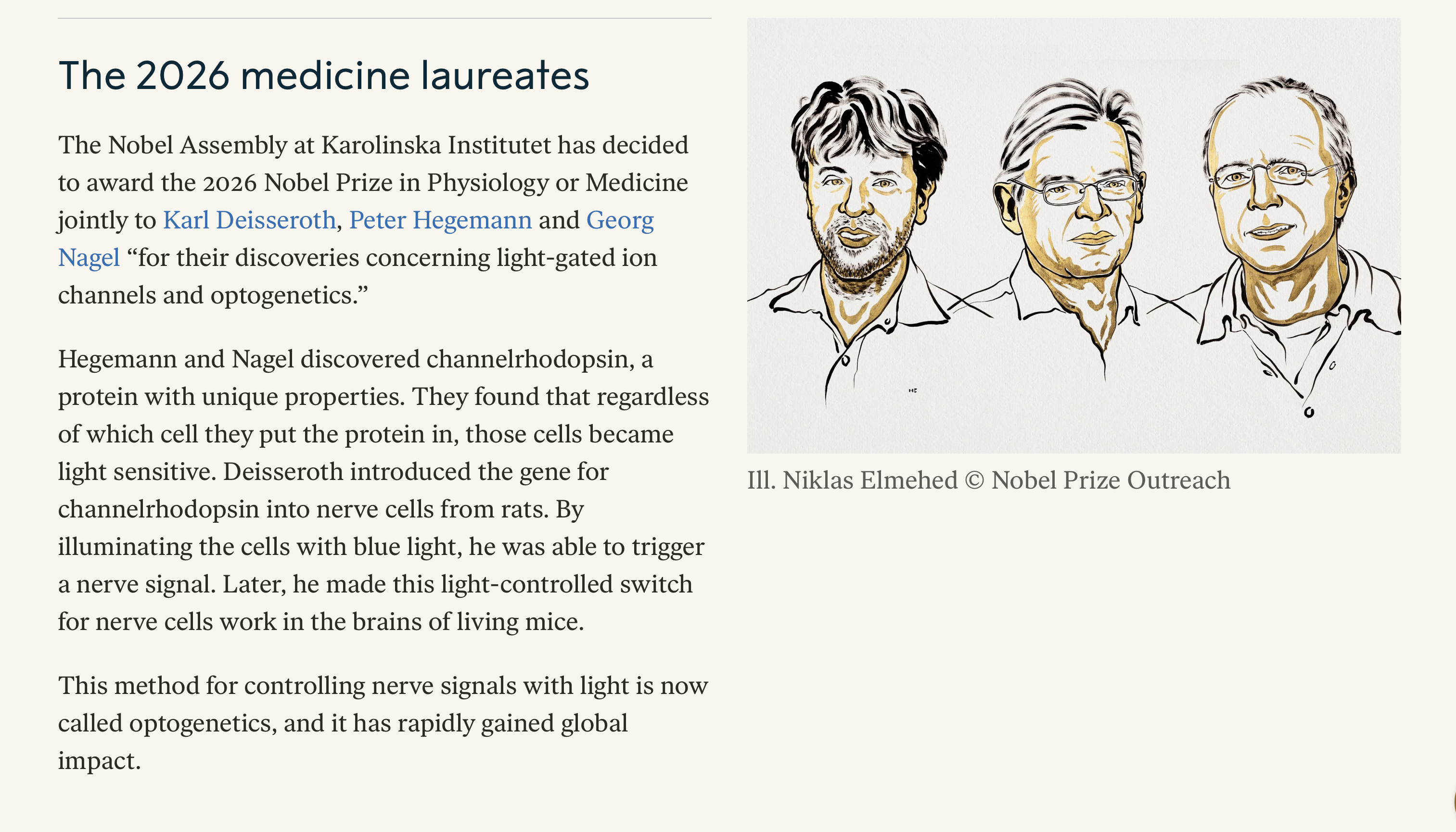
Nobel Prizes in 2026
https://www.nobelprize.org
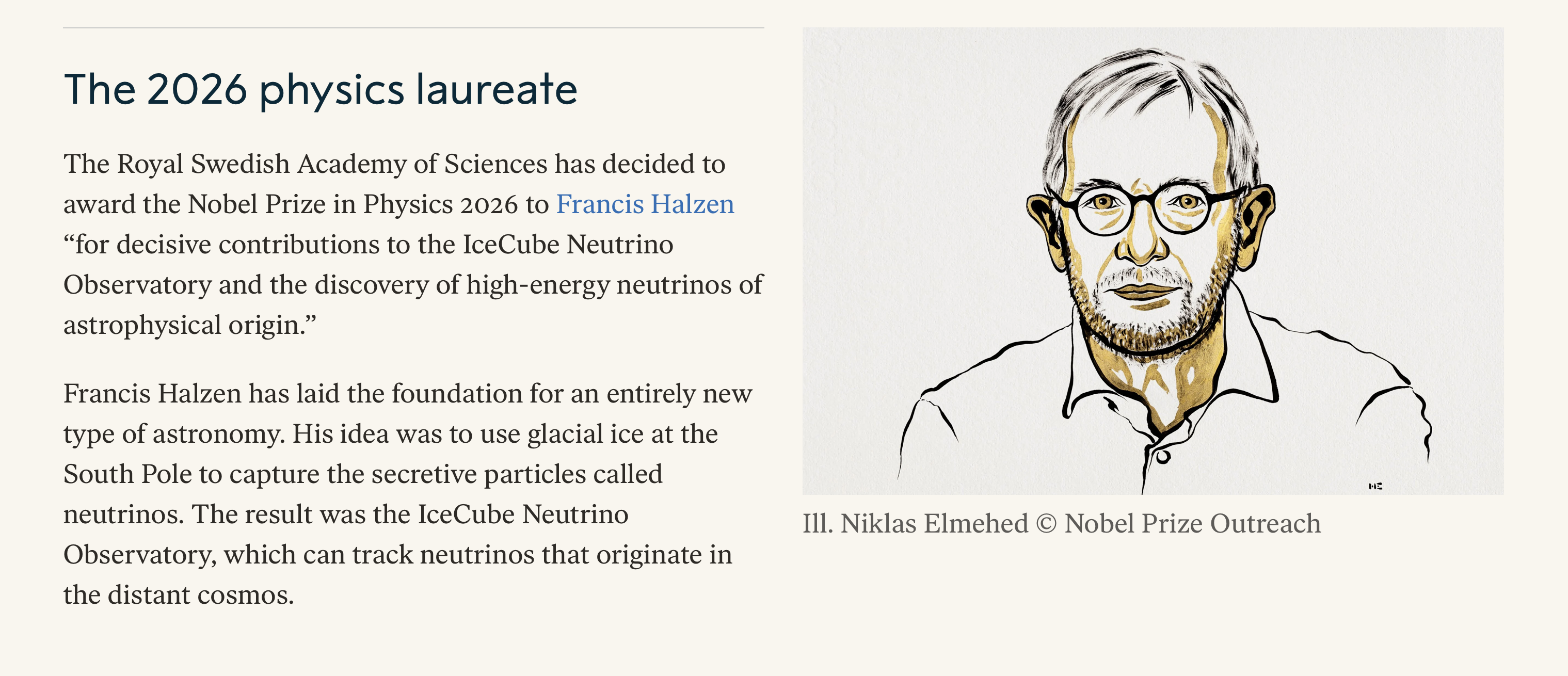
 Ice at the South Pole reveals cosmic particle accelerators
https://www.nobelprize.org/prizes/physics/2026/popular-information/
Francis Halzen has laid the foundation for an entirely new
type of astronomy. His idea was to use glacial ice at the
South Pole to capture the secretive particles called
neutrinos. The result was the IceCube Neutrino Observatory,
which can track neutrinos that originate in the distant
cosmos.
The neutrino is the shyest particle in the universe, has no
electric charge and almost no mass. In general, it passes
unnoticed through matter – seldom does a neutrino make its
presence felt by colliding with an atomic nucleus. Every
second, without you noticing, 65 billion neutrinos from the
Sun flow through your little finger nail.
Neutrinos also come from other regions of space, carrying
clues to some of the mysteries of the cosmos. Researchers
that succeed in capturing these rarer cosmic neutrinos can
then extract information about the extreme environments in
the universe where they originated.
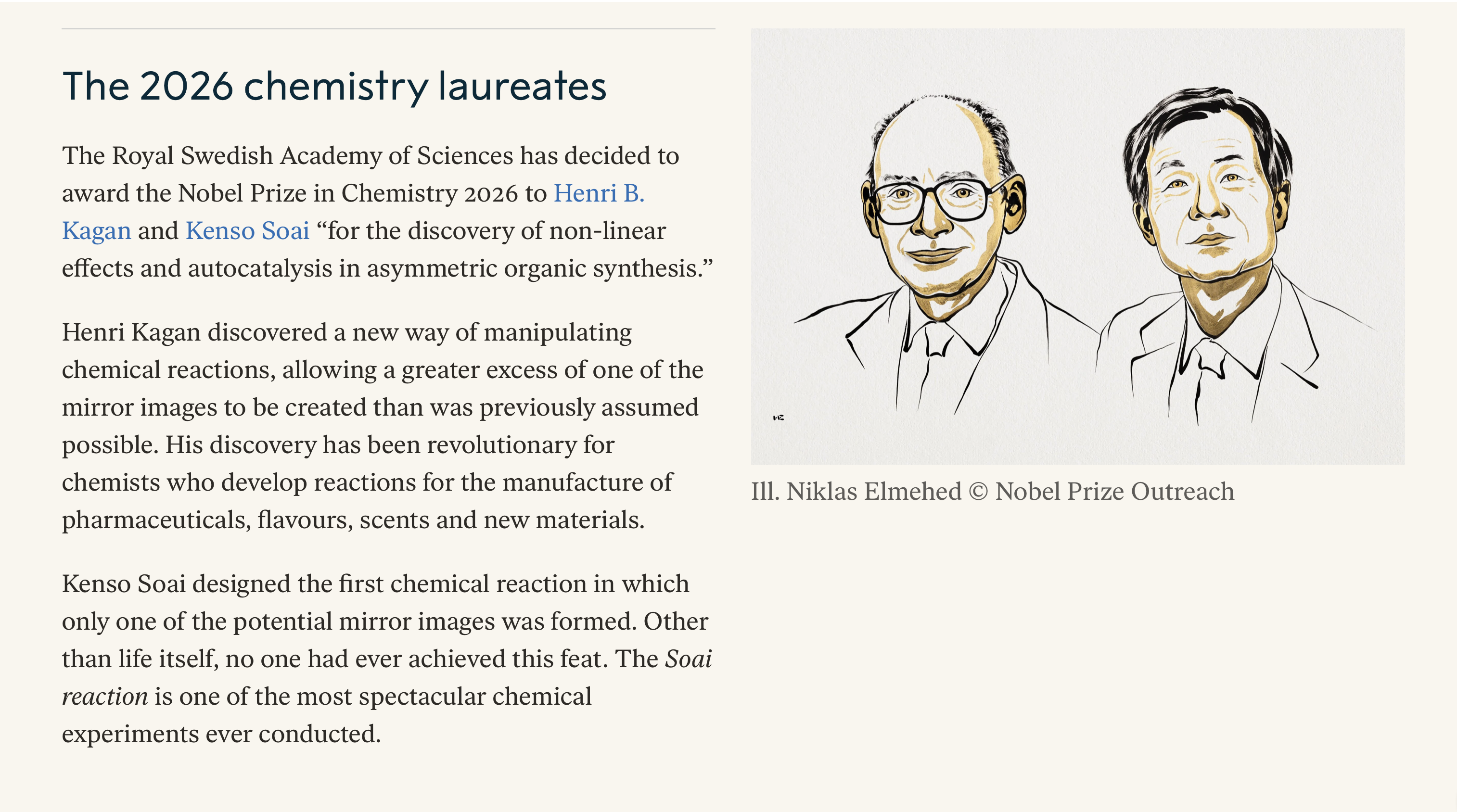
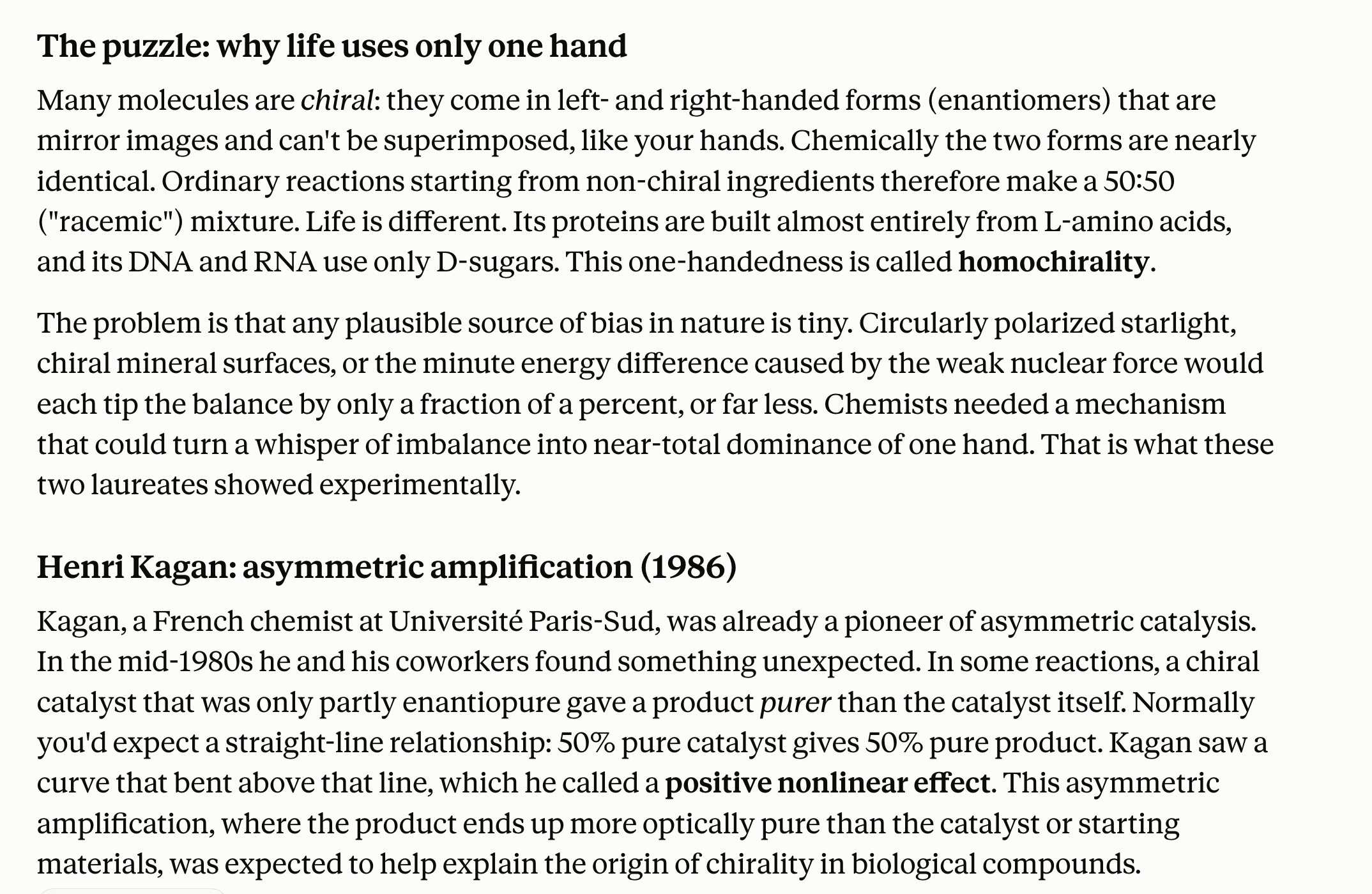
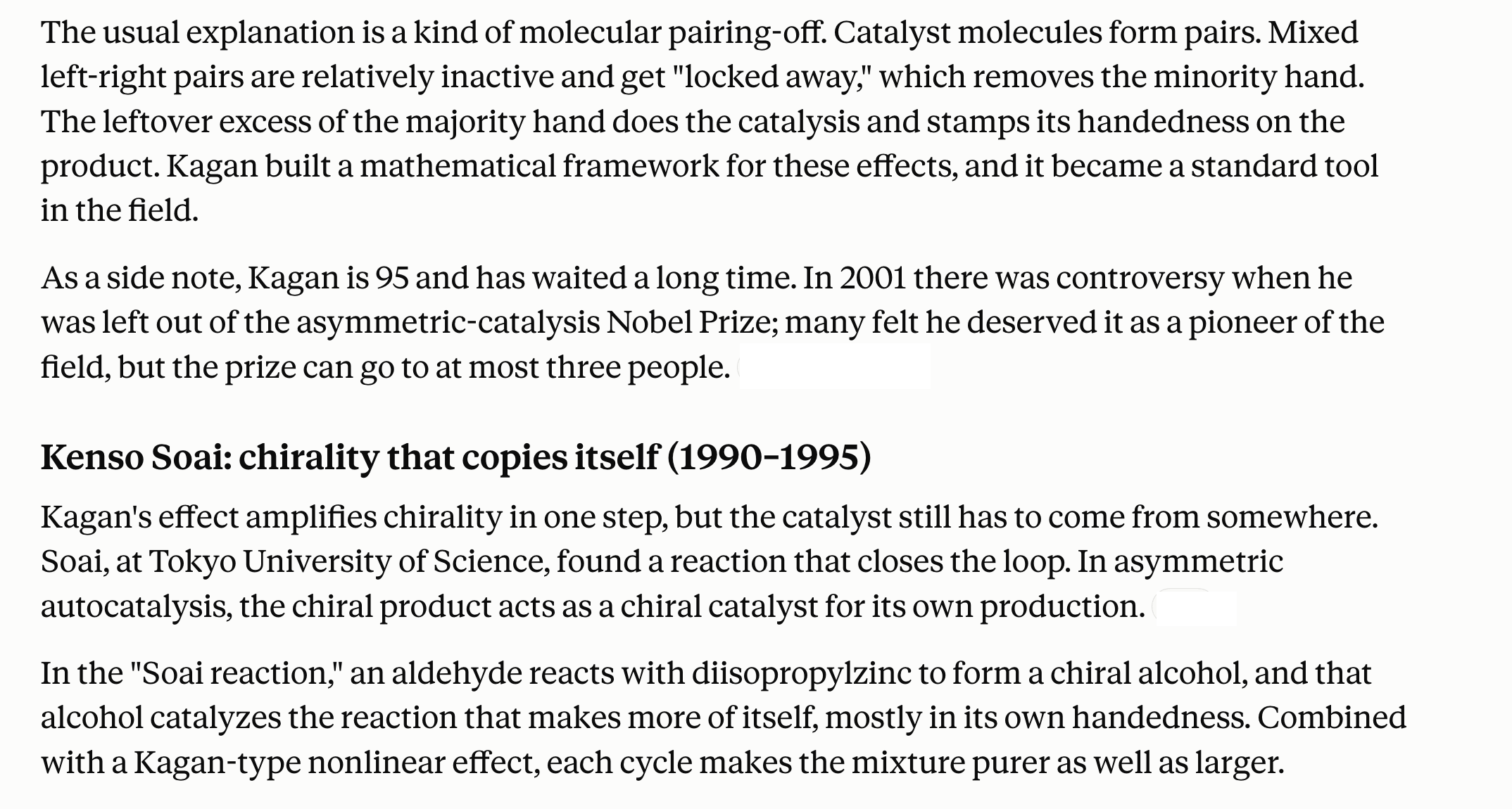
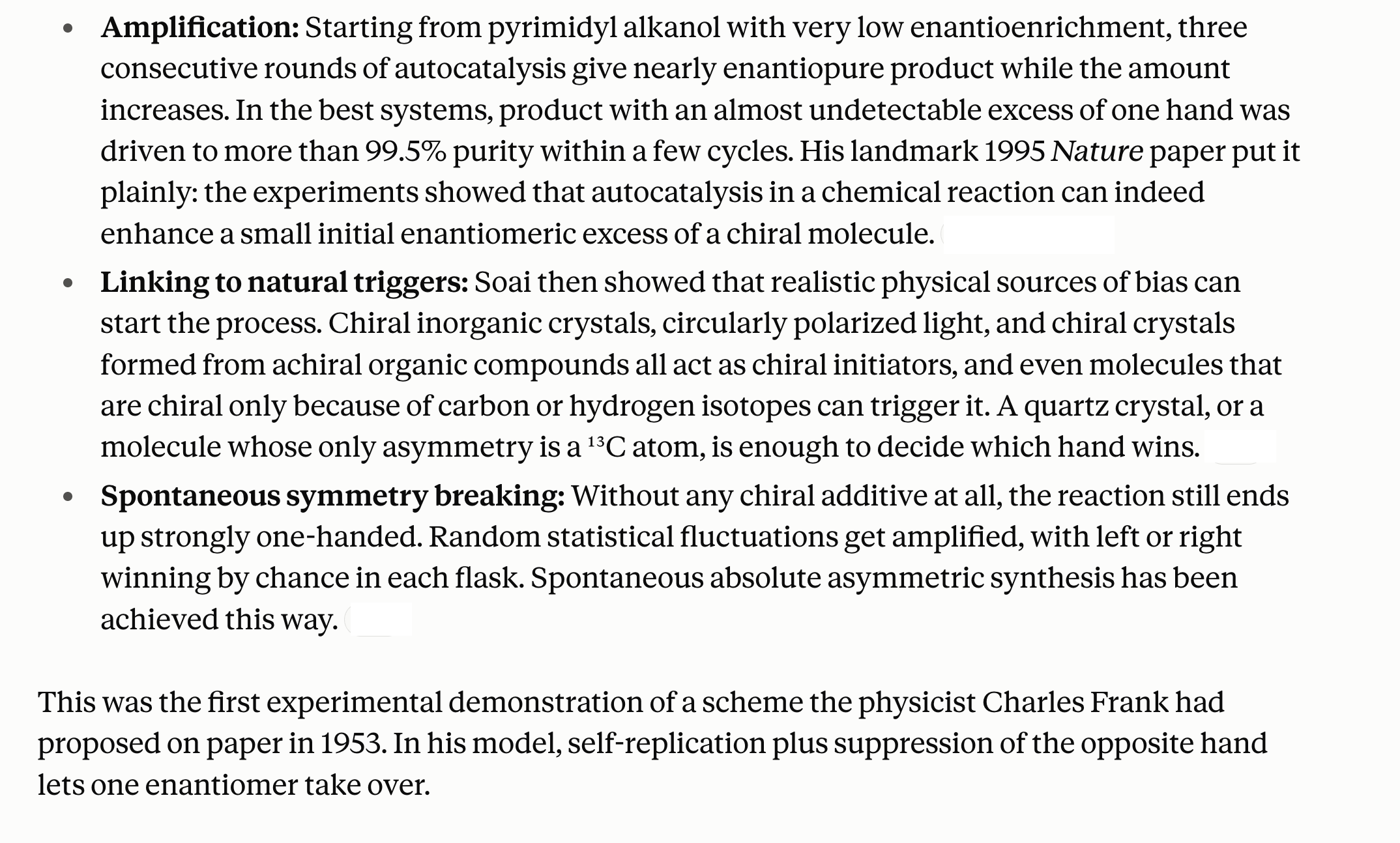
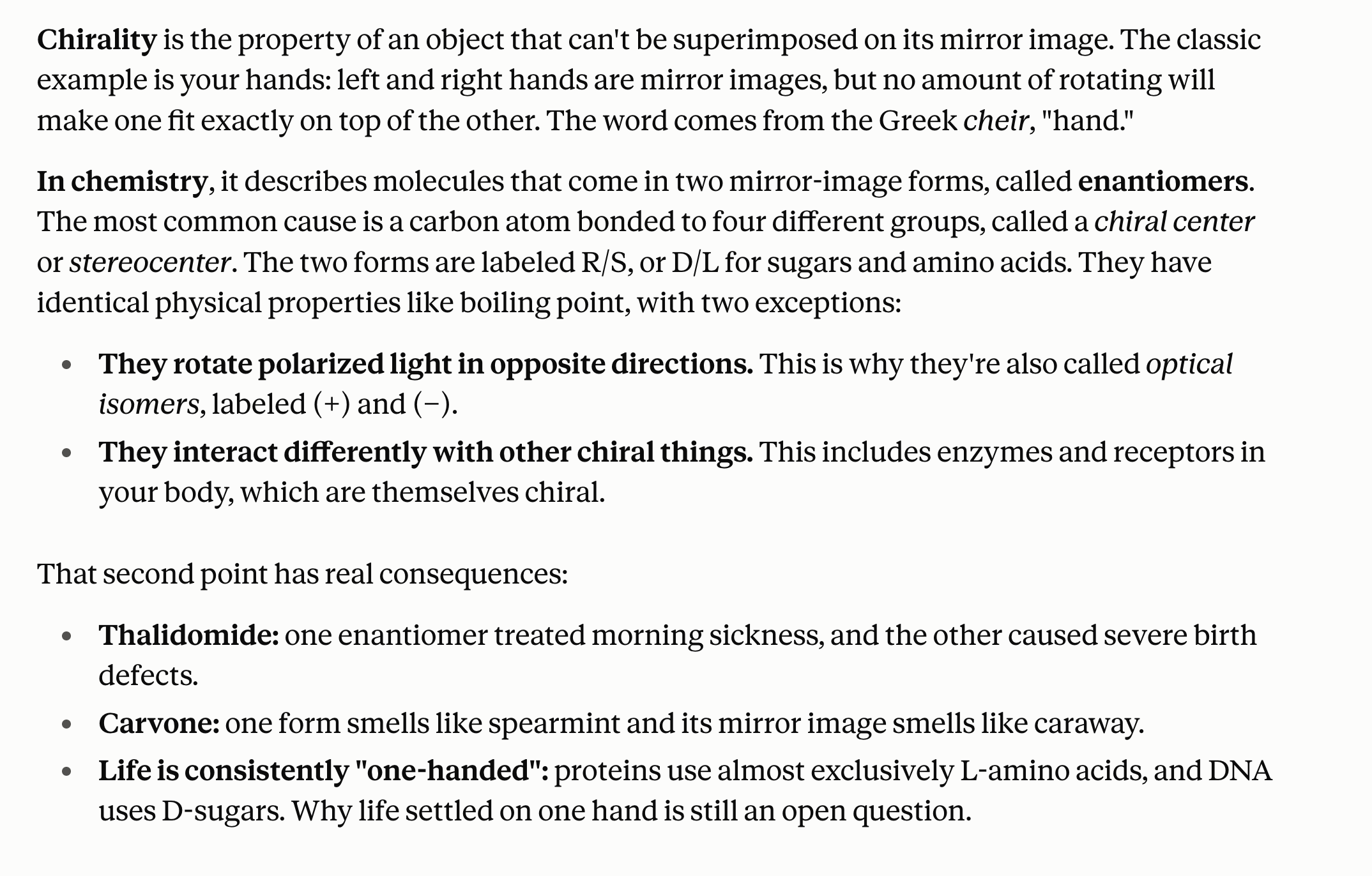
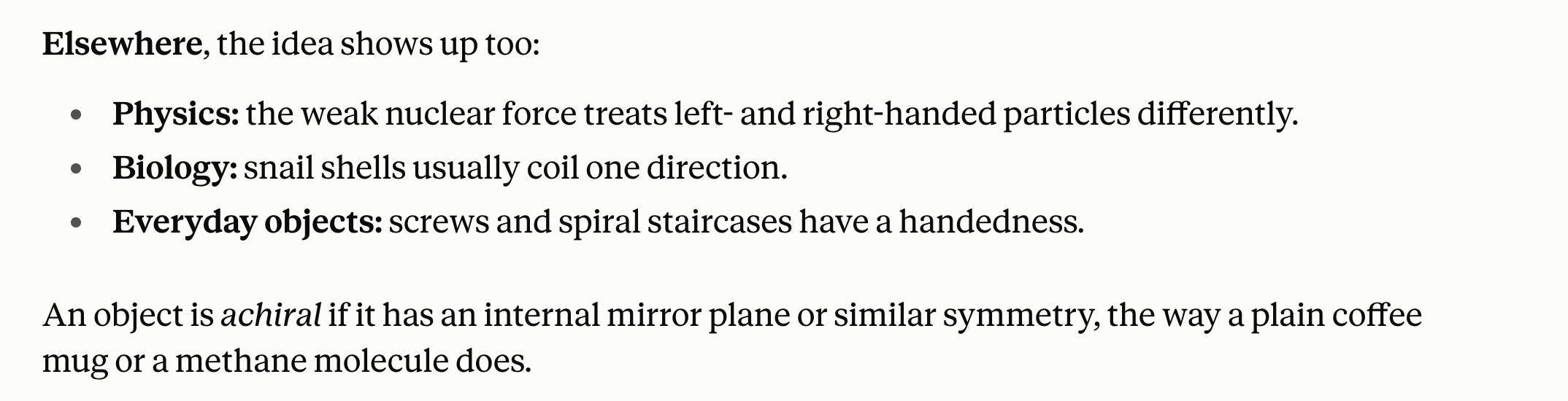
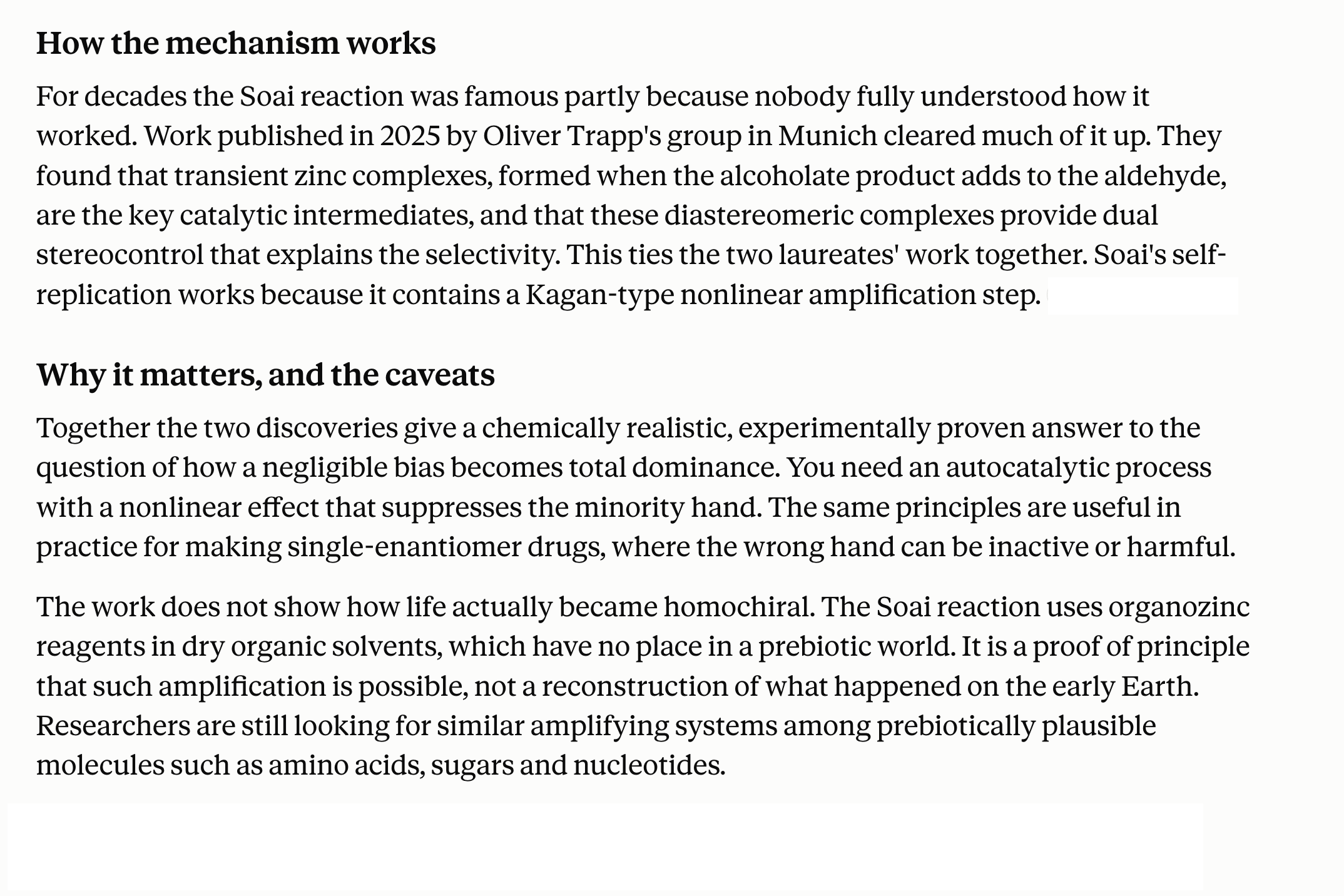 ⓶ Chirality
 This Particle Breaks Time Symmetry
https://www.youtube.com/watch?v=yArprk0q9eE (9min)
⓷ How did Rosalind Franklin miss the helix in her iconic
DNA image? SHE DIDN’T | Science | AAAS
https://www.science.org/content/article/how-did-rosalind-franklin-miss-helix-her-iconic-dna-image-she-didn-t
A new analysis of notes made by X-ray crystallographer
Rosalind Franklin further debunks the myth that she failed
to grasp the significance of the data she herself generated.
In his autobiography, biologist James Watson wrote that an
image Franklin produced — known as Photograph 51 — triggered
his ‘eureka’ moment about the helical structure of DNA. But
Franklin had in fact already recognized and analysed the
helical structure in an earlier image: Photograph 49. “She
reused the same DNA sample for Photograph 51 to create a
better-centred but otherwise identical diffraction image
that would be suitable for publication,” write science
historian Alistair Sponsel and crystallographer Brian
Sutton.
How Photo 51 Shows the Double Helix of DNA
Photo_51_DNA_Double_Helix.pdf
Rosalind Franklin died of ovarian cancer on April 16, 1958,
at age 37. The 1962 Nobel Prize in Physiology or Medicine
went to James Watson, Francis Crick, and Maurice Wilkins for
the structure of DNA.
One useful bit of context: Nobel Prizes aren't awarded
posthumously, so Franklin couldn't have been included in
1962 even if the committee had wanted to. That rule was
formally written into the Nobel Foundation's statutes in
1974, but it was already standard practice. Each prize can
also be shared by at most three people, so whether she would
have been honored had she lived is a matter of historical
debate.
Her contribution is seen as underacknowledged mainly because
of how her data reached Watson and Crick without her
knowledge and how little credit she got in their 1953 paper.
⓸ This Honeybee Silk Film Could Transform How Chronic Wounds Are Treated
https://scitechdaily.com/this-honeybee-silk-film-could-transform-how-chronic-wounds-are-treated/
A biodegradable honeybee silk film that does not interfere
with wound healing could support future dressings that
detect infection or deliver drugs.
An estimated 450,000 people in Australia develop chronic
wounds each year, placing more than $6 billion in costs on
the health system. When those wounds become infected,
healing can stall, the risk of hospitalization and
amputation can rise, and patients may need repeated clinical
treatment. Even changing a dressing can disturb the delicate
new tissue forming underneath.
Honeybee silk breaks down during healing
Researchers from CSIRO and Adelaide University have now
tested a biodegradable film made from engineered honeybee
silk as a possible foundation for a new generation of wound
dressings. CSIRO developed and produced the recombinant silk
film, while the Adelaide University team supplied
wound-healing expertise and conducted the laboratory tests.
Silk that could respond to wounds
Honeybee larvae naturally produce silk proteins to build
protective structures inside the hive. The material differs
from spider silk and silkworm silk, but its proteins share
several useful qualities. They are strong, flexible, and
lightweight. Researchers can also modify the protein
sequence without destroying the structure of the resulting
material.
Related Material from some recent OLLI courses
http://edu-observatory.org/olli/classes.html
Alan Lightman On Richard Feynman's Amazing Mind, Or How
"Hawking Radiation" Could Well Be "Feynman Radiation" (6min)
https://player.vimeo.com/video/104516539
sam.wormley@icloud.com