Mike Meetz and Sam Wormley team up to provide a lively
discussion with OLLI members about science in the news. A
deep understanding of science is not required to share and
discuss recent science in the news.
LATEST NEWS
https://www.sciencealert.com https://www.sciencealert.com
https://phys.org https://sciurls.com/?q=phys
https://www.nature.com https://sciurls.com/?q=nature
https://www.nytimes.com/science https://sciurls.com/?q=nytimes%20science
https://www.quantamagazine.org https://sciurls.com/?q=quantamagazine
https://www.sciencenews.org https://sciurls.com/?q=sciencenews
https://www.scientificamerican.com https://sciurls.com/?q=scientificamerican
WEBPAGES FOR PREVIOUS CLASSES THIS TERM
Sep. 18, 2025
Sep. 25, 2025
Oct. 02, 2025
Oct. 09, 2025
⓵ Gamma Radiation From Lightning
https://www.sciencenews.org/article/gamma-ray-lightning-bolt-radiation
https://agupubs.onlinelibrary.wiley.com/doi/full/10.1029/2019JA026820
A stepping structure in approximately half of the events
suggests gamma rays are produced in individual leaders in the
downward strokes.
This second terrestrial gamma ray flashes (TGF) production
mechanism involves bremsstrahlung by electrons accelerated in
the lightning leader channel. Here ambient electrons can be
accelerated to relativistic energies by the very strong
small-scale and inhomogeneous electric fields at the tip of
the lightning leader channel. In this scenario, TGFs should
be emitted prior to the strong optical emission produced by
the return stroke.
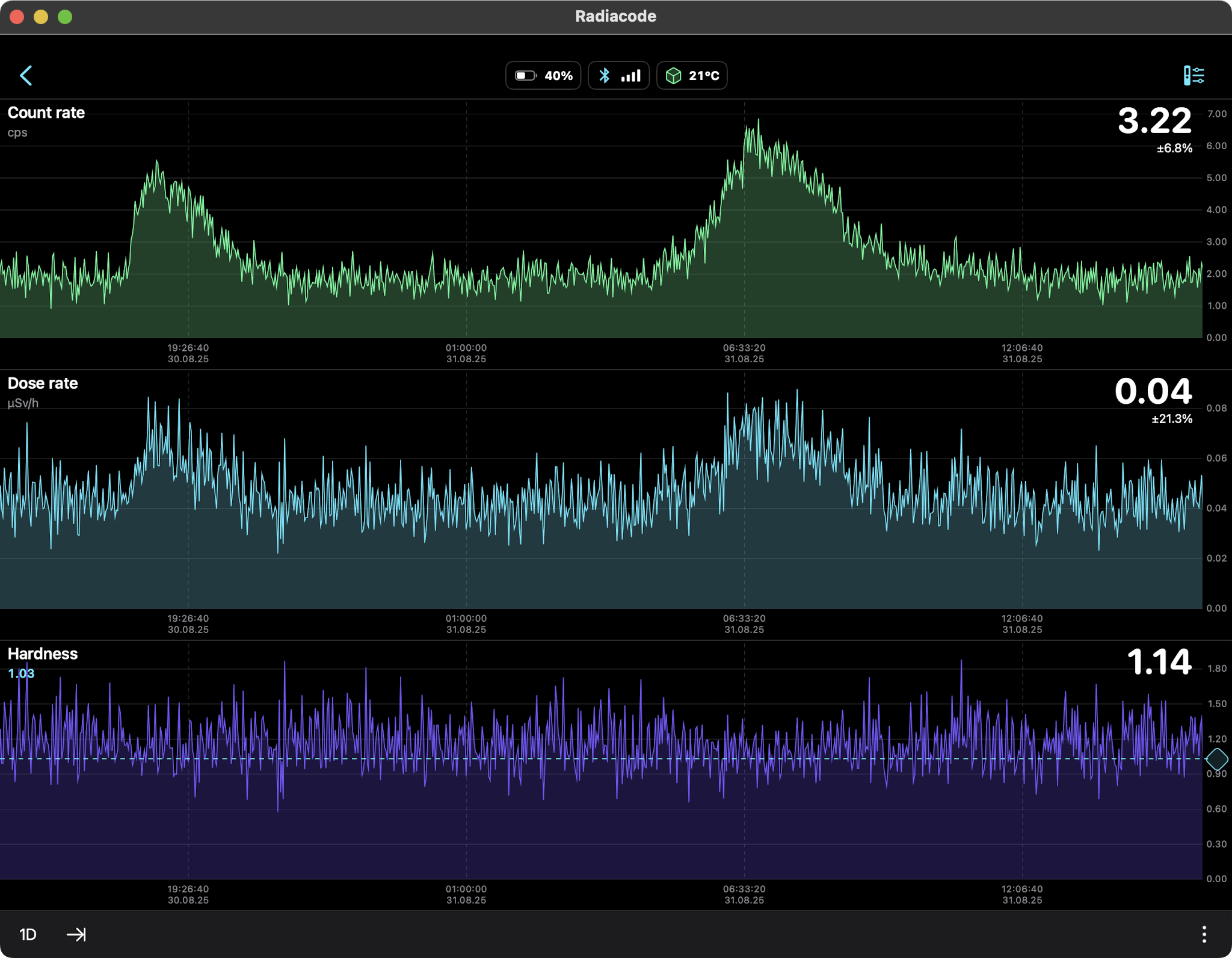 Radiacode 103G Gamma Ray Spectrometer (Aug.31, 2025)
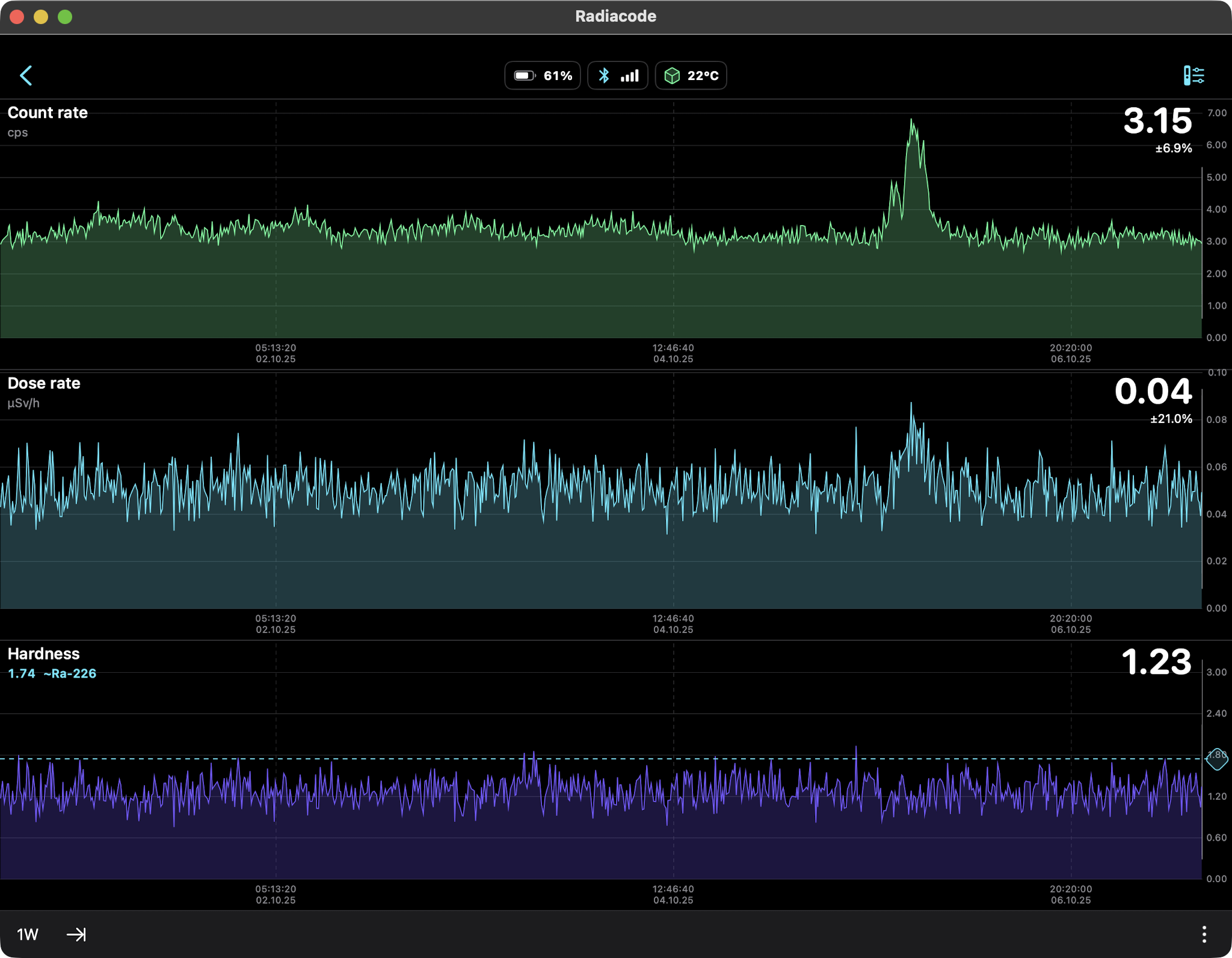 Radiacode 103G Gamma Ray Spectrometer (Oct.1-6, 2025)
How Lightning Works - Weird World of Lightning | Pecos Hank
https://www.youtube.com/watch?v=JXhif3E3l2s (11 min)
Radiacode 103G Gamma Ray Spectrometer (Oct.1-6, 2025)
How Lightning Works - Weird World of Lightning | Pecos Hank
https://www.youtube.com/watch?v=JXhif3E3l2s (11 min)
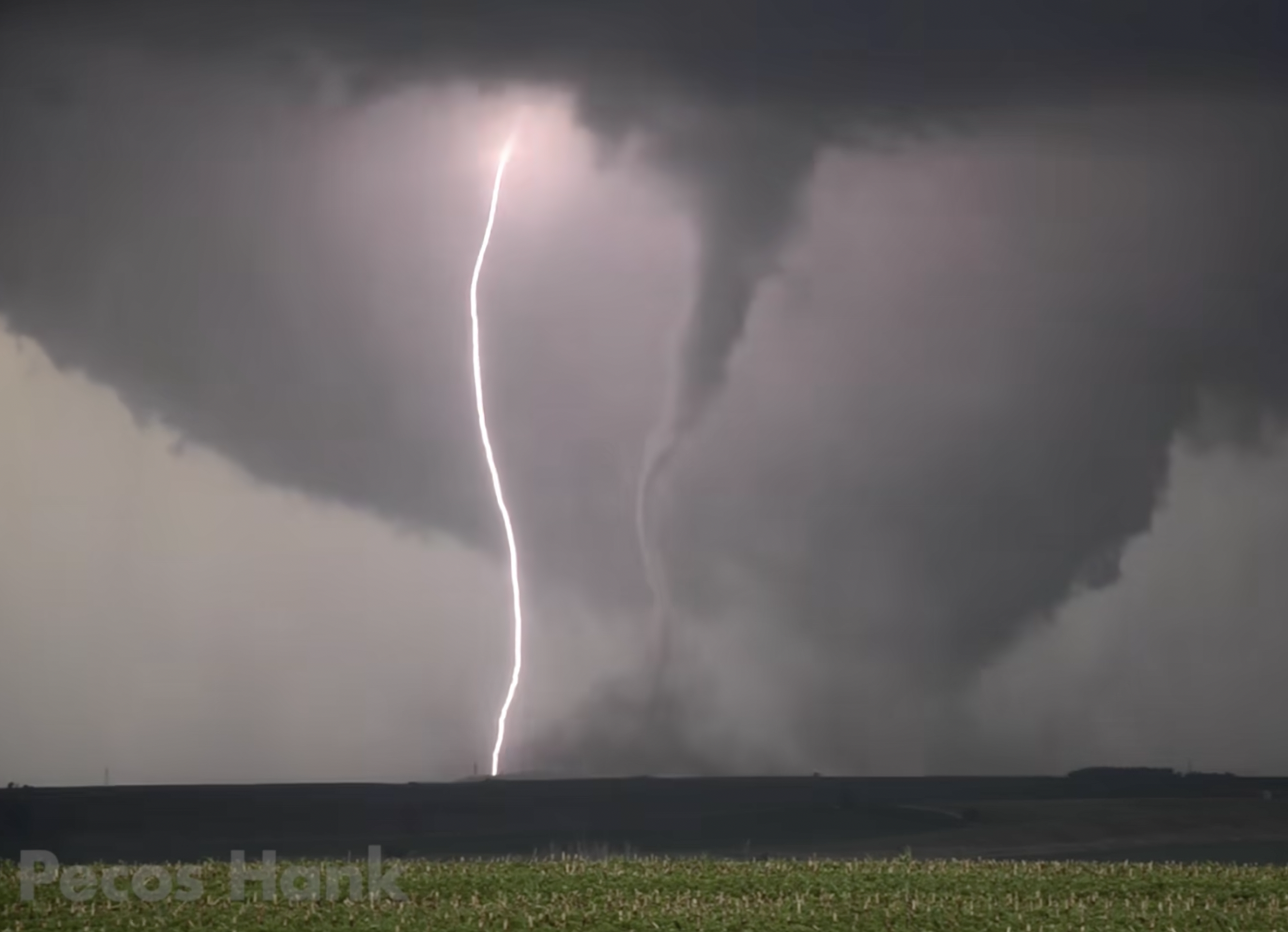 ~Pecos Hank
Birth Of Lightning In Thunderstorms
Thunderstorms have the ability to separate pools of positive
and negative charges in and around them, thus creating
powerful electric fields. Lightning is born between two
oppositely charged regions as a network of electrically
conductive channels called leaders materialize and begin to
tunnel a path through the poor conductive air in between.
Think of leaders as a sort of jumper cable. The leaders
branch out in two directions, each with opposite polarities
toward both regions in an attempt to neutralize the charge
separation.
Cloud Flashes or Intracloud Lightning
Most lightning flashes occur within the storm and are called
cloud flashes or intracloud lightning.
Ground Flash or Cloud-To-Ground Lightning
When one end of the bidirectional leader network connects to
the ground or object on the ground we call it a ground flash,
or cloud-to-ground lightning. CG for short.
When Step Leaders & Upward Leaders Meet
In the most common CGs, a negatively charged step leader
approaches the ground. The electric field between the step
leader and the ground strengthens to the point that an
oppositely charged positive leader (aka upward streamer)
begins reaching up bridging the gap between the two. More
than one upward leader may initiate and attempt to connect
with the downward leader, however, the first to reach a
downward propagating step leader will suddenly complete a
channel path through the resisting air for the flow of
powerful electrical current between the Earth and cloud.
Electrons then RAPIDLY accelerate down the channel causing
extreme heating and the brightest flash of the event. This is
the return stroke of negative CGs. In rare photographs, you
can see failed upward connecting leaders that didn’t reach,
the downward leader first, and thus terminating into the air.
What Causes Thunder?
The air around lightning becomes So hot that it explodes as a
supersonic shock wave that transitions to an acoustic wave
within a few meters. This rapid expansion of air molecules
creates sound waves that radiate outward about 1 mile every 5
seconds. The sound we hear is thunder.
Why Does Lightning Flicker?
Often after a negative CG return stroke, multiple other
return strokes follow causing the main channel to flicker.
This is called a multistroke CG flash.This repetitive nature
is caused by recoil leaders forming on the upper end of the
lightning channel in the cloud which is positive polarity.
Common Positive Flashes
The return stroke of typical positive CGs rarely flicker.
Many occur between a positive pool higher in the
thunderstorm, and the ground. Because of the greater distance
the leaders have to blaze through the resisting air, the
return stoke of these positive CGs is often much hotter,
brighter and longer in duration. The peak charge in Positive
CGs can be 10 times more powerful than a typical negative CG
and thus considerably more dangerous. These are generally the
most powerful CGs, reaching temperatures up to 30,000
Celsius. That’s roughly 5 times hotter than the surface of
our Sun. Positive CGs only account for about 5-10% of all
ground flashes worldwide, But In tornado Alley, they are an
atypically common sight. I tend to see them just downstream
of strong storm updrafts.
Bolt From The Blue
Sometimes a bolt of lightning can leap miles away from a
storm jolting earthlings with surprise. We call this a Bolt
from The Blue. Outdated paradigms suggested these clear air
channels leaping out the back of storms were positive in
polarity. But the latest research using lightning mapping and
high speed cameras have shown most of these startling zaps
are indeed negative. If you capture a Bolt from the Blue and
it has a lot of branching, chances are it was a negative CG
instead of a positive.
What is Upward Lightning?
Sometimes storms can grow upscale into massive complexes
stretching across states. These systems can have horizontally
layered charge regions that serve as the conduit for
lightning to travel over a 100 kilometers. They transfer HUGE
amounts of charge, and cause abrupt changes in the electric
field, which can trigger another flash in a sort of domino
effect. Upward lightning travels UP from tall objects on the
ground into the storm.
This is Also Called Ground-To-Cloud Lightning
Almost all upward moving flashes are triggered by a nearby
lightning flash, either when leader activity or a return
stroke occurs close enough to the tall object causing an
abrupt change in the electric field. This video was
possible thanks to lightning scientist Tom Warner’s research.
⓶ Genes Have Harnessed Physics to Help Grow Living Things
https://www.quantamagazine.org/genes-have-harnessed-physics-to-help-grow-living-things-20251010/
The finding is part of a trend that defies the norm in
biology. Typically, biologists try to characterize growth,
development and other biological processes as the result of
chemical cues triggered by genetic instructions. But that
picture has often seemed incomplete. Researchers now
increasingly appreciate the role of mechanical forces in
biology: forces that push and pull tissues in response to
their material properties, steering growth and development in
ways that genes cannot.
Modern imaging and measurement techniques have opened
scientists’ eyes to these forces by flooding the field with
data that invites mechanical interpretations. “What has
changed over the past decades is really the possibility to
watch what happens live, and to see the mechanics in terms of
cell movement, cell rearrangement, tissue growth,” said
Pierre-François Lenne (opens a new tab) of Aix Marseille
University, one of the researchers behind the recent study.
⓷ Sodium lon Batteries Are Going to be EVERYWHERE - Here's Why
https://www.youtube.com/watch?v=FPCaq-Him0Q (19 min)
~Pecos Hank
Birth Of Lightning In Thunderstorms
Thunderstorms have the ability to separate pools of positive
and negative charges in and around them, thus creating
powerful electric fields. Lightning is born between two
oppositely charged regions as a network of electrically
conductive channels called leaders materialize and begin to
tunnel a path through the poor conductive air in between.
Think of leaders as a sort of jumper cable. The leaders
branch out in two directions, each with opposite polarities
toward both regions in an attempt to neutralize the charge
separation.
Cloud Flashes or Intracloud Lightning
Most lightning flashes occur within the storm and are called
cloud flashes or intracloud lightning.
Ground Flash or Cloud-To-Ground Lightning
When one end of the bidirectional leader network connects to
the ground or object on the ground we call it a ground flash,
or cloud-to-ground lightning. CG for short.
When Step Leaders & Upward Leaders Meet
In the most common CGs, a negatively charged step leader
approaches the ground. The electric field between the step
leader and the ground strengthens to the point that an
oppositely charged positive leader (aka upward streamer)
begins reaching up bridging the gap between the two. More
than one upward leader may initiate and attempt to connect
with the downward leader, however, the first to reach a
downward propagating step leader will suddenly complete a
channel path through the resisting air for the flow of
powerful electrical current between the Earth and cloud.
Electrons then RAPIDLY accelerate down the channel causing
extreme heating and the brightest flash of the event. This is
the return stroke of negative CGs. In rare photographs, you
can see failed upward connecting leaders that didn’t reach,
the downward leader first, and thus terminating into the air.
What Causes Thunder?
The air around lightning becomes So hot that it explodes as a
supersonic shock wave that transitions to an acoustic wave
within a few meters. This rapid expansion of air molecules
creates sound waves that radiate outward about 1 mile every 5
seconds. The sound we hear is thunder.
Why Does Lightning Flicker?
Often after a negative CG return stroke, multiple other
return strokes follow causing the main channel to flicker.
This is called a multistroke CG flash.This repetitive nature
is caused by recoil leaders forming on the upper end of the
lightning channel in the cloud which is positive polarity.
Common Positive Flashes
The return stroke of typical positive CGs rarely flicker.
Many occur between a positive pool higher in the
thunderstorm, and the ground. Because of the greater distance
the leaders have to blaze through the resisting air, the
return stoke of these positive CGs is often much hotter,
brighter and longer in duration. The peak charge in Positive
CGs can be 10 times more powerful than a typical negative CG
and thus considerably more dangerous. These are generally the
most powerful CGs, reaching temperatures up to 30,000
Celsius. That’s roughly 5 times hotter than the surface of
our Sun. Positive CGs only account for about 5-10% of all
ground flashes worldwide, But In tornado Alley, they are an
atypically common sight. I tend to see them just downstream
of strong storm updrafts.
Bolt From The Blue
Sometimes a bolt of lightning can leap miles away from a
storm jolting earthlings with surprise. We call this a Bolt
from The Blue. Outdated paradigms suggested these clear air
channels leaping out the back of storms were positive in
polarity. But the latest research using lightning mapping and
high speed cameras have shown most of these startling zaps
are indeed negative. If you capture a Bolt from the Blue and
it has a lot of branching, chances are it was a negative CG
instead of a positive.
What is Upward Lightning?
Sometimes storms can grow upscale into massive complexes
stretching across states. These systems can have horizontally
layered charge regions that serve as the conduit for
lightning to travel over a 100 kilometers. They transfer HUGE
amounts of charge, and cause abrupt changes in the electric
field, which can trigger another flash in a sort of domino
effect. Upward lightning travels UP from tall objects on the
ground into the storm.
This is Also Called Ground-To-Cloud Lightning
Almost all upward moving flashes are triggered by a nearby
lightning flash, either when leader activity or a return
stroke occurs close enough to the tall object causing an
abrupt change in the electric field. This video was
possible thanks to lightning scientist Tom Warner’s research.
⓶ Genes Have Harnessed Physics to Help Grow Living Things
https://www.quantamagazine.org/genes-have-harnessed-physics-to-help-grow-living-things-20251010/
The finding is part of a trend that defies the norm in
biology. Typically, biologists try to characterize growth,
development and other biological processes as the result of
chemical cues triggered by genetic instructions. But that
picture has often seemed incomplete. Researchers now
increasingly appreciate the role of mechanical forces in
biology: forces that push and pull tissues in response to
their material properties, steering growth and development in
ways that genes cannot.
Modern imaging and measurement techniques have opened
scientists’ eyes to these forces by flooding the field with
data that invites mechanical interpretations. “What has
changed over the past decades is really the possibility to
watch what happens live, and to see the mechanics in terms of
cell movement, cell rearrangement, tissue growth,” said
Pierre-François Lenne (opens a new tab) of Aix Marseille
University, one of the researchers behind the recent study.
⓷ Sodium lon Batteries Are Going to be EVERYWHERE - Here's Why
https://www.youtube.com/watch?v=FPCaq-Him0Q (19 min)
 ⓸ Coral die-off marks Earth's first climate 'tipping point', scientists say
https://www.nature.com/articles/d41586-025-03316-w
The widespread decline of coral reef ecosystems, caused by
surging global temperatures, marks the first time Earth has
reached a climate 'tipping point', say researchers. In a
report released yesterday, they say that without rapid action
to curb greenhouse-gas emissions, other systems on Earth,
such as dieback of the Amazon rainforest, will also soon
reach planetary tipping points - thresholds for profound
changes that cannot be rolled back. The report also points to
positive tipping points - some of which, such as a shift to
solar and wind power, are already in progress - that could
result in runaway benefits for the planet. "We have the
knowledge" to prevent breaching climate tipping points, says
political scientist and co-author of the report Manjana
Milkoreit. "What we need is a kind of governance that matches
the nature of this challenge."
Related Material from some recent OLLI cources
http://edu-observatory.org/olli/classes.html#CURRENT
Alan Lightman On Richard Feynman's Amazing Mind, Or How
"Hawking Radiation" Could Well Be "Feynman Radiation" (6+ min)
https://player.vimeo.com/video/104516539
sam.wormley@icloud.com
⓸ Coral die-off marks Earth's first climate 'tipping point', scientists say
https://www.nature.com/articles/d41586-025-03316-w
The widespread decline of coral reef ecosystems, caused by
surging global temperatures, marks the first time Earth has
reached a climate 'tipping point', say researchers. In a
report released yesterday, they say that without rapid action
to curb greenhouse-gas emissions, other systems on Earth,
such as dieback of the Amazon rainforest, will also soon
reach planetary tipping points - thresholds for profound
changes that cannot be rolled back. The report also points to
positive tipping points - some of which, such as a shift to
solar and wind power, are already in progress - that could
result in runaway benefits for the planet. "We have the
knowledge" to prevent breaching climate tipping points, says
political scientist and co-author of the report Manjana
Milkoreit. "What we need is a kind of governance that matches
the nature of this challenge."
Related Material from some recent OLLI cources
http://edu-observatory.org/olli/classes.html#CURRENT
Alan Lightman On Richard Feynman's Amazing Mind, Or How
"Hawking Radiation" Could Well Be "Feynman Radiation" (6+ min)
https://player.vimeo.com/video/104516539
sam.wormley@icloud.com